
Caring for Nature Begins with Understanding
Written by Marisa Louw
If you’ve ever wondered what happens after someone finds an injured wild bird, a visit to Parys WADER offers a chance to ask your questions and learn about the care that follows.
Parys Wetland Avian Development and Emergency Rescue, better known as Parys WADER, is a local non-profit organisation that works with wild birds and promotes healthy wetland ecosystems. Its eco-tourism visitor experience explores the work behind a possible return to the wild, along with the ways our everyday decisions affect birds. For tourists who like to understand the places they visit, it offers an opportunity to learn about local conservation while supporting the organisation carrying out that work.
Changing human behaviour to conserve nature
Parys WADER’s Theory of Change centres on changing human behaviour to conserve nature. During a visit, you can explore what that means in practice: understanding when a bird needs help, recognising when human intervention is appropriate, and learning why wild birds need space. These ideas connect the work at the facility with decisions you might make in your own garden or while travelling. The organisation aims to help people understand how their actions affect birds and the habitats they depend on, and to use that knowledge when deciding how to respond.
The aim is for that change to continue long after the visit ends.
What to expect during your visit
The experience includes an educational talk and a guided tour of the parts of the working facility that can be shown on the day. You’ll learn about what happens when a bird arrives, why it may need care, and what carers must consider as they work towards a possible release. There is also a chance to discuss how to respond responsibly when you find a bird in trouble.
As you move through the facility, the birds’ needs determine where you can go and what you can see. A bird’s condition, the care taking place, and the need to limit disturbance all affect access. Some areas remain private, and visitors do not handle birds undergoing rehabilitation. You may be asked to keep your distance, follow a particular route, or put your camera away. These arrangements are part of the experience too, giving context to the discussion about human contact and the quiet that recovering birds need. Sightings of particular birds or species cannot be guaranteed.
Meeting Nonna
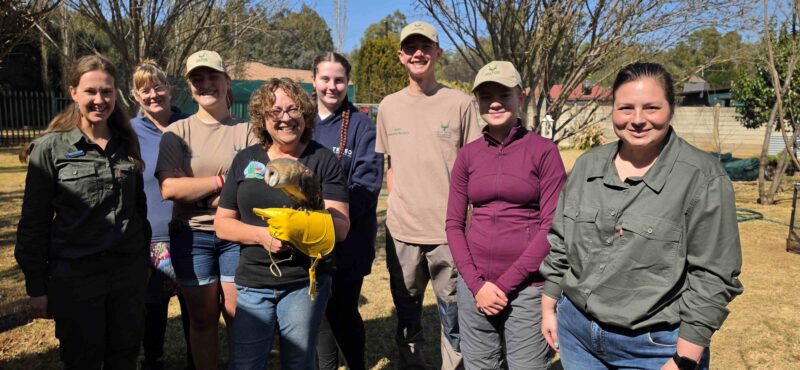
You may also be introduced to Nonna, Parys WADER’s resident Western Barn Owl, if she is willing to participate.
Nonna was raised by humans, so her history differs from that of the wild birds undergoing rehabilitation. She is not a pet, and Parys WADER holds a permit for her captivity. Her welfare determines whether an introduction is appropriate. Meeting her is therefore a possibility rather than a promised part of your booking.
How your visit supports conservation
Your visitor fee helps sustain Parys WADER and its rehabilitation work. It also covers the time, preparation, educational content, and supervision involved in hosting you. This gives the experience a direct link to the conservation work you’re learning about. That work extends beyond the care of individual birds: Parys WADER combines education and environmental stewardship with wildlife care, with the aim of supporting healthy wetlands where birdlife can thrive. Your visit brings learning and support for local conservation together.
What you learn may also change how you observe birds during the rest of your stay, whether you’re on a birding outing or watching wildlife around your accommodation.
Planning your visit
Visits are limited to a maximum of 10 participants and must be booked and confirmed in advance. Ask about current fees, available dates, and the expected duration when you enquire. Children under 16 must be accompanied by an adult who can actively supervise them. If you have accessibility requirements, mention them when booking so the team can explain the facility’s practical limitations. Weather and urgent animal care may affect arrangements, so allow for some flexibility.
You can enquire through the contact details on the Parys WADER website at https://wader.parys.co.za/
Bring your questions and a willingness to learn about the birds, the care they need, and the part people can play in conserving nature.


